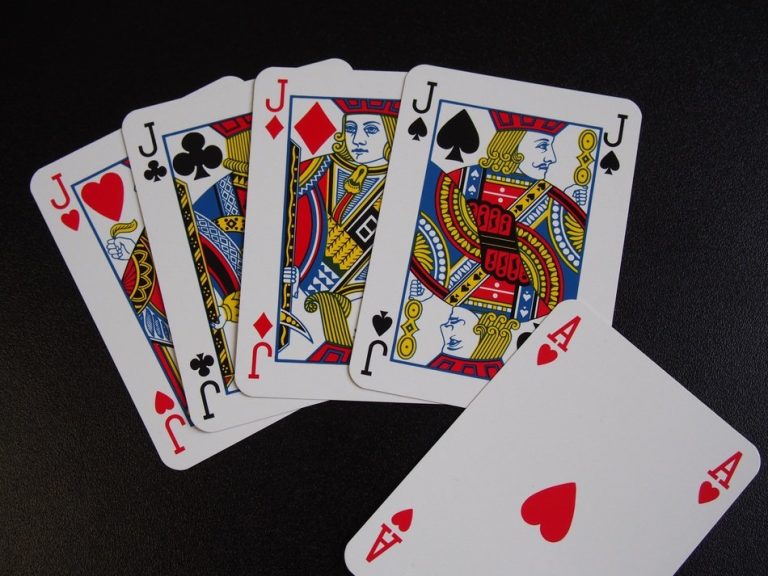


What is gambling? It is not just a game of chance, but a complex mechanism where risk, mathematics, and human desire to control randomness intersect. Gambling forms a whole economy of emotions, technologies, and strategies. Each spin, bet, or throw turns into a miniature model of probability, where numbers dictate the outcome, and psychology determines motivation.
The gambling industry has become part of the global digital culture, combining gambling, calculation, and innovation into a unified system with its own laws, rhythm, and dynamics.
What is gambling: money, risk, and the psychology of winning
What is gambling is a multi-layered phenomenon that combines economics, psychology, and mathematics. The gambling market is estimated to have a total global turnover of $546 billion according to Statista data for 2024. In this system, not only money circulates but also emotions, statistics, strategies, and randomness algorithms. The gaming industry develops entire sectors—from IT to marketing, where each bet becomes an element of a complex ecosystem.
Online platforms are rapidly displacing offline casinos. According to H2 Gambling Capital, 64% of bets are already placed in the digital space, where users have access to slots, roulette, sports betting, and card tournaments. The main formula for success is speed, visual dynamics, and constant engagement.

Origins and development of the gambling industry
What is gambling in a historical context is a path spanning over 4000 years. The first archaeological finds of gaming bones were discovered in Mesopotamia and China. Later, gambling became an attribute of elite leisure: ancient Roman warriors played weapons on dice, while Chinese merchants gambled goods and grain.
The 19th century gave the industry a new impetus. In 1895, mechanic Charles Fey created the first Liberty Bell slot machine, which became a prototype for modern slots. Since the 1960s, casinos have become an economic phenomenon in Las Vegas, and with the advent of the internet in 1994, Malta issued the first license for online gambling.
The modern gaming industry uses principles of machine learning. Algorithms predict the probability of winning, and gaming platforms implement random number generators (RNG) to eliminate the human factor.
Mechanics of gambling
What is gambling in terms of logical processes is managing probabilities. Each bet has an Expected Value, reflecting the average profit or loss. For example, with a bet of 100 rubles and a winning probability of 0.45, the Expected Value will be -10 rubles, making the game unprofitable in the long run.
Industry advertising campaigns adapt psychological triggers. Color, sound, visual effects enhance the feeling of control, although the outcome is entirely random. A classic example is the “near miss” effect, where the reels stop just a step away from the jackpot, encouraging a repeat bet.
Law and regulation
What is gambling from a legal perspective is a strictly regulated activity. In Russia, online bets are allowed only through licensed bookmakers connected to TSUPIS. Law No. 244-FZ regulates gambling zones and taxation, establishing control over transaction transparency.
In Europe, the market is controlled by national regulators:
- United Kingdom—UK Gambling Commission, implementing responsible gaming standards.
- Malta—MGA (Malta Gaming Authority), the main hub for online casino licenses.
- Curacao—simplified license, popular among startups.
Gambling activities in the USA are partially allowed. Legal online platforms operate in Nevada, New Jersey, and Delaware, while other states determine their rules independently.
What is gambling from an economic and statistical perspective
What is gambling in an economic dimension is a sustainable revenue model, where Gross Gaming Revenue (GGR) is formed as the difference between bets and winnings. For example, with a total bet volume of $1 billion and a player return rate of 96%, the GGR will be $40 million.
The most profitable segments are:
- Online casinos—38% of global turnover.
- Sports betting—35%.
- Lotteries—22%.
- Poker and bingo—less than 5%.
The main trend in recent years is mobile gambling, with annual growth exceeding 15%. The primary audience is men aged 25-44 living in countries with developed digital infrastructure.

Psychology of risk
What is gambling from a psychological perspective is a combination of randomness and dopamine stimulation. The brain reacts to unpredictable winning events by releasing dopamine, enhancing the sense of anticipation. This creates the so-called reward loop, where a person seeks to repeat the experience, even while aware of the risk of losses.
Research from the University of Cambridge (2022) showed that losses activate brain areas similar to reactions to pain. Players do not seek to avoid defeat but rather to compensate for it with a new bet. This forms the “chasing player” effect, one of the key mechanisms of addiction.
Technologies and innovations
What is gambling today is a technological industry. Gaming platforms integrate blockchain for transaction transparency, and artificial intelligence analyzes user behavior. Web3-based platforms create decentralized casinos where random number generators are open for verification.
VR casinos transport users into a three-dimensional space, and NFTs turn gaming tokens into digital assets with market value. According to Deloitte’s forecast, by 2030, over 30% of players will use metaverses for betting.
Risks and responsibility
What is gambling from a social responsibility perspective is an activity that requires control systems. Operators implement self-restriction mechanisms, deposit limits, and account blocking in case of signs of addiction. In the UK, the GAMSTOP program is in place, in Canada—PlaySmart, in Russia—Unified Betting Account Zone.
Estimates from the World Health Organization indicate that up to 1.6% of the population show signs of gambling addiction. For comparison, alcoholism affects about 3%, making the issue comparable in scale.
Market perspectives
The gaming industry in the future is a symbiosis of technologies, transparency, and a responsible approach. PwC’s global forecast estimates industry growth to $800 billion by 2035. The main driver is the integration of financial instruments with gaming mechanisms, including crypto bets and micropayments.
Successful companies build trust through open algorithms, RNG certification, and data protection. Technological maturity becomes the main factor in business sustainability.